You may want to use telemedicine but still feel uncertain, wondering, “Is it really convenient?” or “Can I actually use it in Japan?” Especially if you get sick while visiting Japan from abroad, or if you live in Japan but face a language barrier, you may find the process of seeing a doctor confusing.
However, Japan’s current telemedicine system is becoming increasingly foreigner-friendly, with some services offering extensive interpreter support and easy access through smartphones or computers.
This article explains how telemedicine works in Japan, how it differs from other countries, and the benefits of using it. If you are visiting or staying in Japan, please use this article as a reference when considering telemedicine.
Supervising Physician: Y.I., M.D.
honed his expertise in internal medicine through training at several hospitals across Tokyo. He subsequently served in an advanced emergency and critical care center, treating numerous severely ill patients, and continues to work at the forefront as an emergency physician. In addition, he serves as an occupational health physician for corporate clients, engaging in a wide range of health management activities. Drawing on his extensive clinical experience, Dr. Y.I. possesses comprehensive knowledge spanning general outpatient care to emergency medicine.
What is Telemedicine?

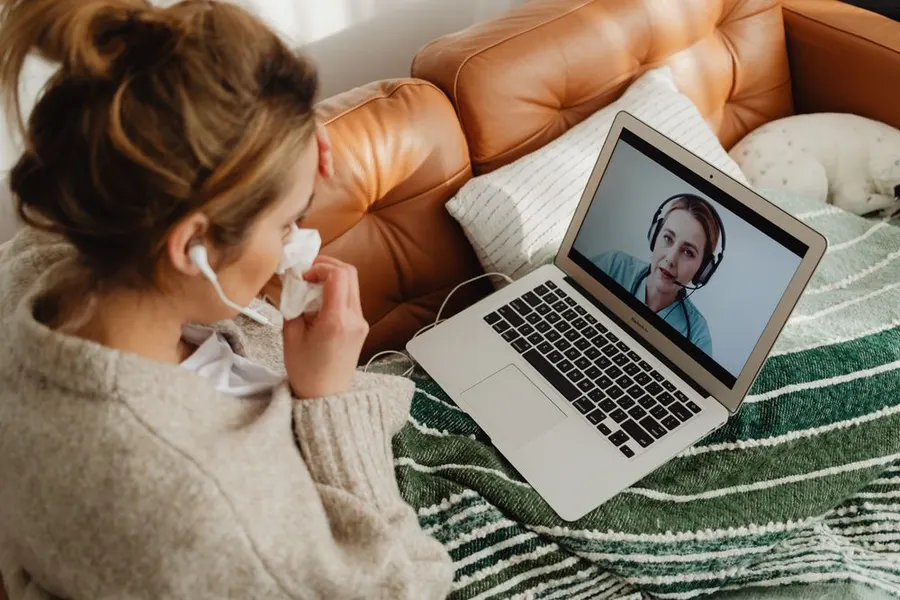
Telemedicine refers to medical consultations conducted without direct face-to-face contact between doctors and patients, using information and communication devices. It is one form of telehealth (which includes doctor-to-doctor collaboration and doctor-patient consultations) and has been growing in recent years. Patients can use devices such as smartphones or PCs to have video calls with doctors, allowing them to receive medical care from home or the workplace. This reduces the burden of hospital visits while improving access to healthcare and convenience.
Basic Concept and Precautions of Telemedicine in Japan
In Japan, telemedicine is positioned as a supplementary method to in-person consultations, which remain the basic standard. According to the Ministry of Health, Labour and Welfare (MHLW), first visits and acute illnesses (sudden worsening of symptoms, etc.) should ideally be handled face-to-face. This is because, during first consultations or acute phases, proper assessment and examinations are critical, and video/audio alone may not be sufficient for accurate diagnosis.
However, for patients with stable chronic conditions, or those who have been seeing the same doctor regularly, telemedicine may be recommended. Since their conditions are relatively stable and the doctor already has continuous medical records, safe consultations can often be provided remotely.
Another crucial aspect is ensuring privacy and secure communications. Medical institutions must use secure systems to prevent sensitive data from leaking to third parties.
References:
MHLW|Medical consultations using ICT (so-called “telemedicine”)
Eligible Patients for Telemedicine in Japan
In principle, Japanese telemedicine applies to patients for whom their regular doctor deems telemedicine appropriate. Examples include:
- Patients with chronic illnesses such as hypertension or diabetes requiring ongoing treatment
- Patients seeking prescriptions for allergic conditions such as hay fever
- Patients continuing pain medication previously prescribed during in-person visits
- Patients with mild symptoms like coughs or rashes
Even when patients use telemedicine, doctors may determine that in-person care is necessary, for example if symptoms worsen suddenly or when diagnostic tests are required. Telemedicine is convenient but not suitable for all cases—flexible application depending on each situation is essential.
Reference: MHLW|Medical consultations using ICT (so-called “telemedicine”)
Differences Between Telemedicine and Online Medical Care in Japan
Although the terms are often used interchangeably, originally telemedicine and online medical care had different scopes in Japan.
Telemedicine was formally recognized in 1997, mainly for patients in remote or underserved areas with limited access to medical institutions. Later, the concept of “online medical care” emerged to include consultations aimed at reducing the burden of in-person visits even for urban residents.
Since the 2018 revision of medical service fees, the terms have been unified under online medical care. Today, in Japan, “telemedicine” and “online medical care” can be used without strict distinction, and are widely applied in both urban and rural areas.
References:
MHLW|Medical consultations using ICT (so-called “telemedicine”)
MHLW|Guidelines for appropriate implementation of online medical care
Features of Telemedicine Overseas and Differences from Japan

Since 2018, Japan has gradually adopted telemedicine, but countries like the U.S., China, the U.K., and Canada introduced it earlier and have integrated it as a standard part of healthcare. In Japan, usage still focuses mainly on chronic disease follow-ups, but further expansion of scope and wider adoption of telemedicine apps remain future goals. Below, we compare Japan with other countries.
Reference: Medical Education|Current status of telemedicine worldwide and in Japan
United States
The U.S. has actively promoted telemedicine as national policy since 2010. By 2016, some services became covered by insurance, leading to rapid growth. By 2020, about 20 million users and over 5,000 facilities were offering telemedicine.
A notable feature is the development of 24/7 access, allowing patients to contact doctors anytime. Telemedicine in the U.S. is more widely recognized as a standard medical option than in Japan.
China
China began expanding telemedicine after the SARS outbreak in 2003. In 2010, a system was launched that provides online reservations, healthcare support, and more.
A key feature is chat-based telemedicine apps, which now have over 300 million users, making it a mainstream healthcare option. Compared with Japan, China’s telemedicine offers far greater diversity in service and delivery.
United Kingdom
In the U.K., telemedicine covers a wide range, including diabetes, psychiatry, radiology, and pathology. By 2014, about half of emergency departments had adopted it.
Mobile apps also offer prescriptions, referrals, and medical certificates via AI-driven platforms. The U.K. leads Japan in both scope and efficiency of medical service delivery using AI.
Canada
Canada introduced telemedicine as early as 1964, mainly to address long hospital wait times and its vast geography. Today, over 25,000 organizations participate in Canada’s largest telemedicine system.
Telemedicine has become indispensable, especially for patients in remote areas. Japan, which also faces regional healthcare disparities, can learn much from Canada’s example.
Telemedicine in Japan with English Support

When foreign visitors use telemedicine in Japan, the doctors are usually Japanese, but services may include English interpreters. Options include integrated video-call interpreting features or advance interpreter bookings. When considering telemedicine, it is advisable to check beforehand whether the service supports English or interpreter arrangements.
Telemedicine in Japan with Chinese Support
Chinese travelers and residents can also access Chinese-language support. By choosing multilingual services, they can handle reservations, consultations, and medical certificates in Chinese.
Go Online Doctor JAPAN also provides Chinese-language telemedicine services, offering convenience for both visitors and residents.
>>Go Online Doctor JAPAN 中国語(簡体字)
>>Go Online Doctor JAPAN 中国語(繁体字)
Telemedicine in Japan with Korean Support
For Korean visitors or residents, having access to Korean-language telemedicine is a major relief. While few hospitals have Korean-speaking staff, telemedicine platforms often provide support.
Go Online Doctor JAPAN also offers Korean-language services, enabling smooth communication in patients’ native language.
Go Online Doctor JAPAN (Korean)
Benefits of Using Telemedicine in Japan

The main benefits of telemedicine in Japan include:
- Reduced burden of clinic visits
- Infection control
- Usability regardless of location
- Easier access to specialists
Reference: Cabinet Office|Advantages and Disadvantages of Online Medical Care
Reduced Burden of Clinic Visits
Patients only need an internet-connected device, saving time and travel costs. This is especially beneficial for chronic patients requiring regular check-ups and prescriptions, elderly patients needing assistance, and busy individuals balancing childcare or work.
Infection Control
By avoiding hospital visits, patients reduce exposure risks in waiting areas and examination rooms. This is especially important during COVID-19 or flu seasons. It also eases strain on healthcare providers by preventing overcrowding.
Usability Anywhere
Telemedicine can be accessed from home, work, or even hotels while traveling. It offers flexibility for patients with mobility challenges, busy schedules, or family obligations.
Easier Access to Specialists
In rural areas or small clinics, some specialties may be unavailable. Telemedicine allows patients to connect with urban specialists, helping reduce regional disparities in medical access.
Expanding Potential of Telemedicine in Japan

Telemedicine reduces the burden of hospital visits, contributes to infection control, and helps resolve healthcare disparities. It is becoming increasingly available in Japan and offers reassurance to foreign residents and travelers.
Go Online Doctor JAPAN provides telemedicine services in over 60 languages, enabling consultations from home or hotels during your stay in Japan. In case of illness, consider QuickDoc for secure and convenient telemedicine.