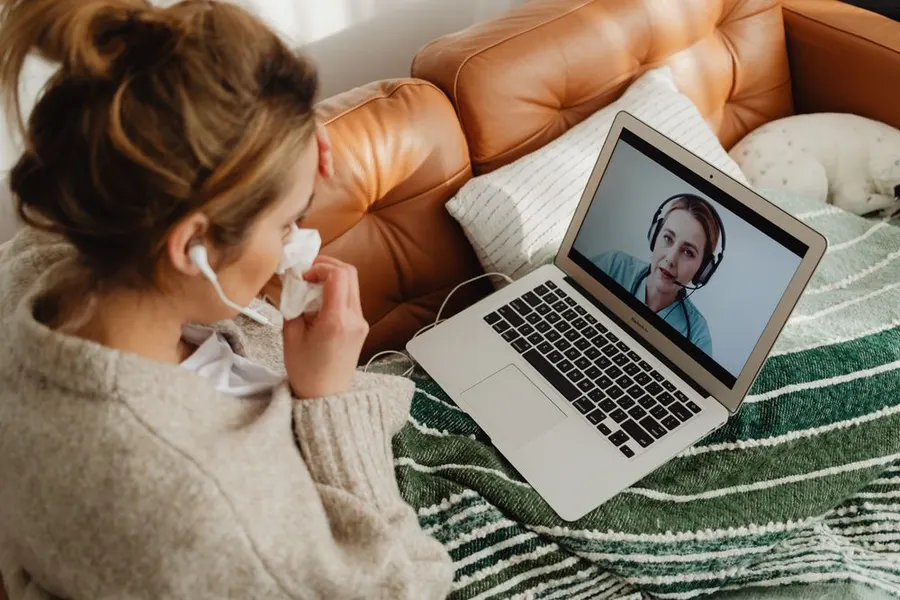
Telemedicine — seeing a doctor by video instead of in person — is legal and established practice in Japan, and a first visit can be conducted fully online. Ordinary clinic telemedicine is still built around residents with Japanese insurance, though, so for a foreign traveler a service designed around that gap works differently: private-pay, English-speaking, and usable from day one of your trip.
What telemedicine is, and how Japan treats it
Telemedicine refers to a medical consultation conducted by video rather than face to face. It is practiced in Japan under Ministry of Health, Labour and Welfare guidance, and a first visit can be carried out online — you do not need an existing relationship with the doctor or a prior in-person appointment. It is used across a wide range of everyday problems: chronic conditions like hypertension, prescription refills for something already diagnosed, hay fever, and mild symptoms like a cough or a rash.
Even within an ongoing telemedicine relationship, a doctor may still recommend an in-person visit if symptoms suddenly worsen or a test is needed — telemedicine is meant to flex with the situation, not replace clinical judgment.
How Japan compares to the US, UK, and other countries
Countries like the US, UK, and Canada adopted telemedicine earlier and more broadly than Japan, often integrating it into insurance coverage and, in the US case, building out 24/7 access as a standard option. Japan's adoption was more gradual, expanding since 2018 and again through the COVID-19 period. The practical difference for a visitor is not whether telemedicine is available but who it is set up for: most Japanese services assume local insurance and Japanese-language communication, which is the gap traveler-focused services are built to fill.
If you're enrolled in Japan's public insurance
Foreigners staying in Japan longer term (for example, students and workers staying more than three months) are generally required to enroll in public health insurance, and can use ordinary clinic-based telemedicine similarly to Japanese residents. The catch: most clinic-based telemedicine in Japan assumes Japanese-language communication, and interpretation isn't always available.
If you're a short-term visitor
If you're not enrolled in Japan's public insurance — the case for nearly all tourists — a private-pay service designed for travelers is generally the more practical option. These are typically English-language by default, don't require any prior relationship with a doctor, and can also help with the documents a travel insurance claim needs: a medical certificate and an itemized receipt.
Benefits, and what telemedicine can't do
- No travel required — you can consult from your hotel room instead of finding and traveling to a clinic.
- Usable in more places — availability doesn't depend on finding an English-friendly clinic in the specific area you're visiting.
- Less exposure — avoiding a waiting room matters more during flu season or a wider outbreak.
The limits are real, too: no physical exam, no lab tests, no imaging. If your doctor determines your condition needs any of those, they'll tell you directly and point you to in-person care rather than guessing over video.
What a traveler-focused consultation includes
| Item | Included? |
|---|---|
| Video consultation with a Japan-licensed, English-speaking physician | Yes |
| Prescription sent to a pharmacy near you | Yes, if prescribed |
| English medical certificate and itemized receipt | Yes |
| Cost of the medication itself | No — paid directly at the pharmacy |
Total consultation fee: ¥33,000, flat and tax-included — no Japanese health insurance required, and no referral needed.
Is telemedicine legal in Japan?
Yes. It's practiced under Ministry of Health, Labour and Welfare guidance, and a first visit can be conducted online — no prior in-person appointment or existing relationship with the doctor is required.
Can tourists use telemedicine in Japan?
Yes — private-pay services designed for travelers don't require Japanese public insurance and are typically available from day one of a trip.
Can I get a prescription through a telemedicine consultation?
If the doctor determines it's appropriate, yes. Some medications, including controlled substances, can't be prescribed through an online visit.
What can't telemedicine do?
It can't replace a physical exam, lab tests, or imaging. If those are needed, your doctor will refer you to in-person care.